What to Do When a Pet Dies: A Gentle Step-by-Step Guide
If you're reading this in the first hours after your pet died, take a breath. You don't have to figure everything out right now. There are a few practical things ahead of you, and we'll go through them one at a time, gently — but none of them are urgent in the way that grief makes everything feel urgent. You have a little time. The most important thing you can do right now is breathe.
This is a guide for the hardest day. Read only as far as you need to.
First, there's no wrong way to feel
Whatever you're feeling — numb, shattered, strangely calm, unable to stop crying, unable to cry at all — it's a normal response to losing someone you love. Because that's what your pet was. Family. Grief for a pet is real grief, and anyone who suggests otherwise simply hasn't lived it.
You may feel a wave of guilt — should I have noticed sooner, done something differently, been there. That's one of the most common parts of this, and it's almost never deserved. You loved them, and you did your best with what you knew. Let that be enough for today.
You don't have to be strong. You don't have to have a plan. You just have to get through the next little while, and these steps will help you do that.
If your pet died at home
If your pet died at home, here are the calm next steps.
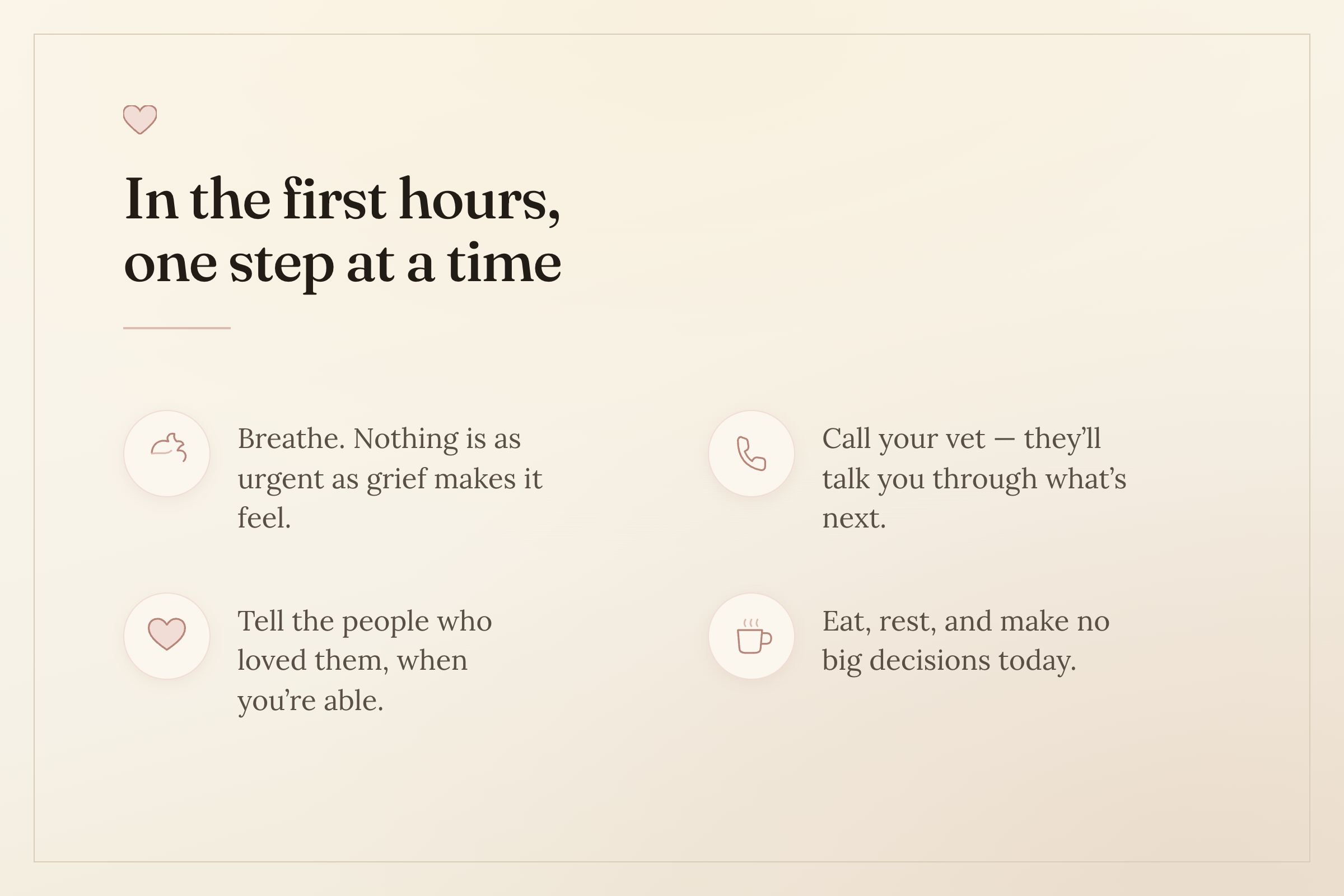
Reach out to your vet. Your regular veterinary clinic is the best first call — they can talk you through your options and, in many cases, help you arrange what comes next. If it's after hours, most clinics have an emergency or after-hours line, and there are dedicated pet aftercare and cremation services that can be reached at any time. You don't have to know what you want yet. You're just opening the conversation.
Caring for them in the meantime. Until you've decided what you'd like to do, your pet can rest somewhere quiet and cool. It's okay to take a little time to sit with them, to say goodbye in your own way, before anything else happens. There's no schedule here.
You don't have to decide everything today. Burial, cremation, where to go from here — these are real decisions, but they can wait until you've caught your breath. Ask your vet what your options are and what they'd recommend; they've helped many families through exactly this, and they can give you the specifics for your area.
If your pet died at the vet, or you chose euthanasia
If your pet died at the clinic — or you made the decision to have them euthanized — please know that choosing to end an animal's suffering is an act of love, even though it may not feel like it right now. It is one of the kindest and hardest things an owner ever does.
Your vet will usually walk you through what happens next and the choices you may be asked to make. You don't have to have answered them in advance, and it's completely okay to say you need a moment, or that you'll decide tomorrow.
Aftercare: what to ask
You may be asked to choose between a few common options for your pet's body — most often some form of cremation or burial. Within cremation, you may hear terms like communal (your pet is cremated with others, and ashes aren't returned) and private (your pet is cremated individually, and you can keep their ashes). Burial options vary widely depending on where you live and local rules.
We're deliberately not going to quote prices or steer you toward any particular choice, because the right answer depends entirely on you, your pet, and where you are. The best thing you can do is ask your vet directly: what are my options, what does each one involve, and what would you suggest? They'll give you clear, local answers, and there's no wrong choice — only the one that feels right for you.
Telling the people who need to know
When you're able, let the people who loved your pet know — a partner, family, close friends, anyone who'll feel this loss too. You don't owe anyone a long explanation. "Our [pet] died today" is enough, and it's okay if saying it out loud is hard.
If there are children in the house, telling them honestly matters. It's gentlest to use the real words — that your pet died — rather than "went to sleep" or "went away," which can leave a child confused or frightened. Helping a child through this is its own careful subject, and we have a separate, gentle guide for it when you're ready.
Take care of your body too
Grief is physical. Today, try to do the small, ordinary things that are easy to forget: drink some water, eat something even if you're not hungry, lie down if you can.
And don't make any big decisions today — not about a new pet, not about giving away their things, not about anything that can wait. The fog will lift a little. The choices will still be there when it does.
When you're ready — not now — a place for the love
This part is for later. Not today, and maybe not for a while. There's no hurry, and you can close this page without reading on.
When the rawest days have passed, many people find comfort in making a small, deliberate place for the love that's still here. Keeping their collar where you'll see it. Framing a favorite photo. Writing down the things you don't want to forget — the exact sound of their greeting, the way they flopped over for a belly rub — before grief blurs the small details.
Some people, further down the road, like to gather their pet's whole story into one place: who they were, the ordinary days, the goodbye, and the love that didn't end with it. We make a keepsake for exactly that — The Story of Your Pet, an 8-page illustrated book ($32) painted from a photo of your actual pet and finished by hand, delivered as a digital, print-ready PDF. It's something you keep, not something to think about now. We mention it only so you know it exists for when you're ready.
If and when that time comes, our fuller guide on how to memorialize a pet who died walks through the gentle options, from the simplest to the most lasting.
Be gentle with yourself
They were family, and this is hard precisely because it mattered. Missing them is just love with nowhere to go for a little while.
For today, you've done enough. Take the next breath, and the one after that. Be gentle with yourself, and with anyone else in the house who's hurting too.